Electrolux TD2-8 (TE1120)
8 kg condenser dryer. 2 stars, 357 kWh a year on the label's one load a week (about $114 at 32¢/kWh), 600 mm wide by 600 mm deep.
If you buy through a link on this page, the retailer may pay us a commission.
Prices, key specs and fit
Prices
No price for this model at the retailers checked (28 Oct 2026): The Good Guys, Appliances Online and Bing Lee. It may be sold elsewhere, or through the brand's site.
Similar models with a price
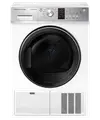 Fisher & Paykel DE8060P3 8 kg | $1,269 | Check price |
| Beko BDCB8020W 8 kg | $808 | Check price |
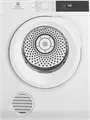 Electrolux EDV705H3WC 7 kg | $599 | Check price |
Same dryer type and a similar capacity, priced at the retailers checked.
Key specs
- Type
- Condenser
- Capacity
- 8 kg
- Width
- 600 mm
- Depth
- 600 mm
- Height
- 850 mm
- Labelled cycle
- 3 h 59 m
- Energy stars
- 2
- Energy a year
- 357 kWh
- Cost a year, one load a week
- $114
- Made in
- Poland
- Registration no.
- ACD0992
Dimensions are cabinet figures. Manufacturers offer wall-mount brackets for some vented models; heat-pump and condenser dryers sit on the floor.
Will it fit
The cabinet measures 600 mm wide, 600 mm deep and 850 mm high in the Australian Government's energy-rating database. Enter the space it has to go in.
Not included. These are cabinet figures. Manufacturers state a ventilation clearance per model in the installation instructions; a figure typed into the Clearance box applies to both sides, the back and the top. No clearance figure for this model is held here, so the answer above allows none until one is entered.
Manuals and guides
Electrolux's manuals are on its support site.
How it compares
- 357 kWh a year against a median of 359 across the 6 other condenser dryers within a kilo of its size; 3 of them use less.
Compare it
Similar models: Fisher & Paykel DE8060P3 · Beko BDCB8020W · Electrolux EDV705H3WC · Haier HDC80E1. More in Electrolux dryers, Condenser dryers and 8 kg dryers.
Figures trace to this machine's entry (ACD0992) in the Australian Government's energy-rating database. The label's annual energy figure assumes one load a week, so a household drying four loads a week uses four times it; the heat pump payback page works through that arithmetic.